Source: The Word Among Us June 2006 Issue
Big mahalo nui loa to Sts. Peter and Paul Parish for providing this wonderful magazine.
Excerpts from articles from husband and wife Randall and Theresa Cirner.
Husbands, Love Your Wives! - 5 Actions That Say I Love You
"Husbands, love your wives, just as Christ loved the church and gave Himself up for her" (Ephesians 5:25).
How Do I Love You?
1. By Praying. Prayer is the most important thing a husband can do for his wife.
2. By Talking. Communication is very important between a husband and a wife. However, the timing of the talk is also important.
3. By Meeting Needs. Help your wife's needs. The important needs are as follows:
a. Time for God;
b. Time with other women;
c. Time out or in other words, a break
4. By Encouraging. Say something sincere to will make her feel good about herself.
5. By Going Out Together. The occasional date is very important to a happy marriage.
How to Really Love Your Husband?
Making it Real. Consider your husbands likes and preferences in little things as well as big.
Questions for Reflection:
1. Do I pray for my husband?
2. Do I show him respect?
3. Do I cook for my husband or for myself?
4. Do I do the things my husband asks me to do?
5. Does our time out together ever reflect my husband's interests?
6. Do I serve my husband cheerfully when he is sick?
7. Do I impose my standards of 'proper' behavior on my husband?
8. Do I resent my husband's time with his friends?
9. Is your home a place that both of you find physically pleasing?
As yourself each day? How is the lord calling me to show my love to my husband today?
"Outdo one another in showing honor and mutual affection' (Romans 12:10).
 Hat tip to Lay Witness Magazine
Source: The Holy See
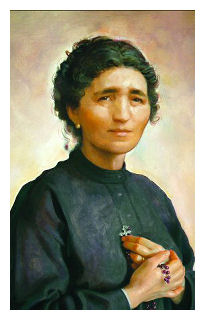
Recently, our Holy Father Benedict XVI beatified Eurosia Fabris, an Italian woman who raised 11 children.
"The virtues of 'Mamma Rosa,' who died in 1932, were honored during the
beatification ceremony in Vicenza. 'She knew how to transform her
very large family into a school of holiness,' Vatican Radio said on the eve of
the ceremony.
Click above link to The Holy See for the complete story.
While reading the May-June Issue of Lay Witness Magazine I came across the following quote from Kimberly Hahn:
"Priority loving in the family means loving your spouse first, your children second. The love of husband and wife is the wellspring of love for the entire family. Though our children's needs seem greater and more immediate, we must be careful not to allow their needs to consume the time and energy needed for our spouse. Besides, the greatest need of our children is to experience the love of their parents for each other. Often when my husband and I embrace, our young children try to wedge between us--not to break us apart but to feel the squeeze of love."
From A Mother's Plan of Life: Living God's Call in the Domestic Church
People are illogical, unreasonable, and self-centered.
Love them anyway.
If you do good, people will accuse you of selfish ulterior motives.
Do good anyway.
If you are successful, you will win false friends and true enemies.
Succeed anyway.
The good you do today will be forgotten tomorrow.
Do good anyway.
Honesty and frankness make you vulnerable.
Be honest and frank anyway.
The biggest men and women with the biggest ideas can be shot down by the smallest men and women with the smallest minds.
Think big anyway.
People favor underdogs but follow only top dogs.
Fight for a few underdogs anyway.
What you spend years building may be destroyed overnight.
Build anyway.
People really need help but may attack you if you do help them.
Help people anyway.
Give the world the best you have and you'll get kicked in the teeth.
Give the world the best you have anyway.
A big mahalo to Sisters Suzanne and Maurice of Holy Family Home in Osaka, Japan and Elizabeth Keith, for sharing this story with my family.
Personally, this was one of my "favorite quotes" by Mother Theresa. It was only after recently speaking to mutual friends of the Keiths, Sister of Charity sisters Suzanne and Maurice, as well as Mrs. Elizabeth Keith, who we had the pleasure of meeting last night, that we learned who the original author was and the interesting story behind it.
Source: Kent M. Keith
I'm sure most of you are familiar with the foregoing "commandments" and if you are like most people, you have attributed this work to Mother Theresa of Calcutta.
However, Kent M. Keith wrote it when he was a 19 year old student at Harvard.
The Paradoxical Commandments were written by Kent M. Keith when he was 19, a sophomore at Harvard College. He wrote them as part of a book for student leaders entitled The Silent Revolution: Dynamic Leadership in the Student Council, published by Harvard Student Agencies in 1968. The Paradoxical Commandments subsequently spread all over the world, and have been used by millions of people.
Mother Teresa, or one of her co-workers, put the Paradoxical Commandments up on the wall of Mother Teresa's children's home in Calcutta. That fact was reported in a book compiled by Lucinda Vardey, Mother Teresa: A Simple Path, which was published in 1995. As a result, some people have attributed the Paradoxical Commandments to Mother Teresa.
As Kent explains in his book, Do It Anyway: The Handbook for Finding Personal Meaning and Deep Happiness in a Crazy World:
"I found out about it in September 1997 at my Rotary Club meeting. We usually begin each meeting with a prayer or a thought for the day, and a fellow Rotarian of mine got up and noted that Mother Teresa had died, and said that, in her memory, he wanted to read a poem she had written that was titled "Anyway." I bowed my head in contemplation, and was astonished to recognize what he read–it was eight of the original ten Paradoxical Commandments."
"I went up after the meeting and asked him where he got the poem. He said it was in a book about Mother Teresa, but he couldn't remember the title. So the next night I went to a bookstore and started looking through the shelf of books about the life and works of Mother Teresa. I found it, on the last page before the appendices in Mother Teresa: A Simple Path. The Paradoxical Commandments had been reformatted to look like a poem, and they had been retitled "Anyway." There was no author listed, but at the bottom of the page, it said: "From a sign on the wall of Shishu Bhavan, the children's home in Calcutta."
"Mother Teresa, or one of her coworkers, thought that the Paradoxical Commandments were important enough to put up on the wall at their children's home, to look at, day after day, as they ministered to the children. That really hit me. I wanted to laugh, and cry, and shout–and I was getting chills up and down my spine. Perhaps it hit me hard because I had a lot of respect for Mother Teresa, and perhaps because I knew something about children's homes. Whatever the reason, it had a huge impact on me. That was when I decided to speak and write about the Paradoxical Commandments again, thirty years after I first wrote them."
Thanks Sue!
Holy Spirit, my Light, my Life, my Love, my Strength,
Be with me now and always: in all my doubts, anxieties and trials,
Come, Holy Spirit; in hours of loneliness, weariness and grief,
Come, Holy Spirit; in failure, in loss and in disappointment,
Come, Holy Spirit; when others fail me, when I fail myself,
Come, Holy Spirit; when I am ill, unable to work, depressed,
Come, Holy Spirit; now and forever, and in all things,
Come, Holy Spirit.
 The month dedicated to the Sacred Heart of Jesus is almost over. But I'd like to post the following.
Thanks to Brad for sharing this with us.
Source: Tan Books
Sacred Heart of Jesus, leading soul on the narrow right path into eternal life, have pity and mercy on me, my families, friends and benefactors.Amen
In honor of your Sacred Heart, O Jesus, have pity and mercy, on my friends, families and benefactors who are in purgatory, grant them each now everlasting peace, happiness and life, through the merits of your Holy Wounds, Amen
The Sacred Heart of Jesus revealed MORE than the famous 12 Promises for devotion to His Sacred Heart. Here is an extract of the MANY different promises He made through St Margaret Mary. They are from the book, “The Devotion to the Sacred Heart of Jesus” (“How to Practice the Sacred Heart Devotion”) by Fr. John Croiset, S.J, reprinted by TAN Publishers.
PROMISES ATTACHED TO THE WORSHIP OF THE IMAGE OF THE SACRED HEART
a) BLESSINGS PROMISED TO NATIONS THAT PUT THE IMAGE OF THE SACRED HEART ON THEIR STANDARDS:
". . . Our Divine Lord does not wish to stop there: He desires, it seems to me, to enter with pomp and magnificence into the houses of princes and kings, in order to be honored there as much as He was outraged, despised and humiliated in His Passion, and to receive as much pleasure at seeing the great ones of this world abased and humiliated before Him, as He felt bitterness at seeing Himself annihilated at their feet."
b) BLESSINGS PROMISED TO FAMILIES WHERE THE IMAGE OF THE SACRED HEART IS HONORED:
"Our Divine Lord assured me that He takes a singular pleasure in being honored under the figure of His Heart of flesh, the image of which He wishes to be exposed in public in order to touch the unfeeling hearts of men. He promised that He would pour out in abundance into the hearts of all those who would honor His Heart all the gifts with which It is filled, and that everywhere this image is exposed and honored, it would draw down all kinds of blessings."
c) BLESSINGS PROMISED TO COMMUNITIES:
"He promised that He would pour out the sweet unction of His ardent charity on all those communities in which this divine image would be honored; that He would turn away from them the thunderbolts of the just anger of God, and that He would restore them to His grace, if they should have the misfortune to fall into sin."
d) BLESSINGS PROMISED TO INDIVIDUALS:
"He promised to pour out into the hearts of all those who honor the image of His Heart all the gifts which It contains. He promised also to imprint His love on the hearts of all those who would wear this image on their persons, and that He would destroy in them all disordered movements."
PROMISES ATTACHED TO THE CONSECRATION TO THE SACRED HEART
Consecration to the Sacred Heart is the principle, the resume and the final term of all the devotional practices demanded by our Divine Lord for His Sacred Heart.
a) THIS CONSECRATION REJOICES THE SACRED HEART AND TERRIFIES THE DEVIL, AGAINST WHOM IT IS A POWERFUL WEAPON.
"Let us renew often our consecration to the Heart of Jesus," writes St. Margaret Mary, "and let us live that consecration faithfully. The Sacred Heart takes a singular pleasure in it.
"The devil has a most intense fear of the devotion to this loving Heart, because of the salvation of the multitude of souls which it effects in favor of those who consecrate themselves completely to the Sacred Heart for the purpose of loving It, honoring It, and glorifying It."
b) CONSECRATION 10 THE SACRED HEART IS A SOVEREIGN REMEDY AGAINST MORTAL SIN.
"I cannot believe," writes St. Margaret Mary, "that those consecrated to the Heart of Jesus will fall under the domination of Satan through mortal sin, if having consecrated themselves to the Heart of Jesus, they endeavor to honor It, love It, and glorify It, by conforming themselves in all things to Its holy maxims."
c) CONSECRATION PUTS SOULS ON THE ROAD TO PERFECTION.
"There is no surer means of attaining perfection than to be consecrated to the Heart of Jesus. If therefore, we wish to attain that perfection which the adorable Heart of Jesus desires of us, we must make an entire sacrifice of ourselves, and of everything that depends on us, to the Sacred Heart and live entirely for It."
d) CONSECRATION WILL PROCURE PEACE.
"Establish your dwelling in the amiable Heart of Jesus, and you will find unalterable peace, strength to carry out all your good desires, and a protection against voluntary faults."
e) CONSECRATION IS THE KEY WHICH OPENS THE SACRED HEART TO US.
"Our Lord gave me to understand that He wishes to be known, loved and adored by men, and for that end He would give them many graces, provided they consecrated themselves to the devotion and love of His Sacred Heart."
f) CONSECRATION TO THE SACRED HEART IS A PLEDGE OF SALVATION.
"There is no surer means of salvation than to consecrate oneself to the Divine Heart of Our Lord Jesus Christ. "The loving Heart of Jesus will not allow any of those consecrated to It to perish, so great is His desire that His Sacred Heart be known, loved and honored by His creatures. In this Sacred Heart they will find assistance during their life in all their necessities; It will be their secure place of refuge at the hour of their death, into which they will be received and protected from their enemies."
PROMISES MADE IN FAVOR OF SINNERS
THE DEVOTlON TO THE SACRED HEART IS AN EFFICACIOUS MEANS OFFERED FOR THE CONVERSION OF SINNERS.
"My Divine Master:' writes St. Margaret Mary, "revealed to me that it was His ardent desire to be known, loved and honored by men, and His eager desire to draw them back from the road to perdition, along which Satan is driving them in countless numbers, that induced Him to manifest His Heart to men with all the treasures of love, mercy, grace, sanctification and salvation that It contains, in order to have a means of satisfying Its desire to pour out on them abundantly Its mercies and Its graces. It is by this means that the Sacred Heart of our loving Jesus wishes to save many souls from eternal perdition . . . This Divine Heart is like a fortress or a secure place of refuge for all poor sinners who wish to take shelter in It from the Justice of Almighty God, the thunderbolts of whose wrath, like an impetuous torrent, would overwhelm sinners and their sins, on account of the enormous number committed at the present time."
THE DEVOTION TO THE SACRED HEART IS A SOVEREIGN REMEDY AGAINST TEPIDITY.
"Our Lord wishes through this devotion to His Divine Heart to rekindle the charity that has grown cold and has almost been extinguished in the hearts of the greater part of Christians; He wishes to give men a new means of loving God by His Sacred Heart, as much as He desires and merits, and of making reparation for their ingratitude.
"If we are cowardly, cold, impure, imperfect, the Sacred Heart is an ardent furnace in which we must purify and perfect ourselves like gold in the crucible. It will purify all that is imperfect in our actions; it will sanctify those that are good."
PROMISES MADE IN FAVOR OF THE JUST
"There is no shorter way of attaining perfection than to render to the Divine Heart an the homage, love, honor and praise m our power.
"I do not know of any other exercise in the spiritual life more calculated to raise a soul in a short time to the height of perfection, and make it taste the true sweetness that is to be found in the service of God; if it were known how pleasing this devotion is to Jesus Christ, there is no Christian, however little his love for our amiable Savior, who would not begin to practice it immediately."
"The names of beginners," writes St. Margaret Mary, "are written on the adorable Heart of Jesus only with ink. This signifies the initial grace given us to combat and conquer our imperfections, especially our proud self-love, which insinuates itself everywhere, sullying and disfiguring our holiest actions. These black letters should be purified from the earth which they contain and made bright in the crucible. This means that our inclinations and actions should be purified in the furnace of the love of the Divine Heart from all that is earthly and human and from all self-seeking.
"These black letters will gradually brighten in the crucible of Divine Love, and become like silver, which signifies purity of heart. But when in the process of purification all the black letters are changed into letters of silver, we must not stop there, we must continue until they are changed into gold.
"It is love that will change them into gold. Charity is the divine gold that will write our names on the Heart of Jesus in letters never to be effaced. We shall then become like holocausts, consumed completely in the ardent flames of the loving Heart of Jesus."
PROMISES FOR THE AFFLICTED
a) THE HEART OF JESUS CONSOLES HIS SERVANTS
IN THEIR PRIVATE CALAMITIES.
b) THE HEART OF JESUS IS THE TRUE SOURCE OF CONSOLATION
IN PUBLIC CALAMITIES.
PROMISES THAT HAVE REFERENCE TO OUR LAST END
THE GREAT PROMISE
This promise is contained in a letter written in May, 1688, by St. Margaret Mary to Mother Saumaise:
"On a Friday during Holy Communion, He said these words to His unworthy slave, if I mistake not: I promise you in the excessive mercy of My Heart that Its all-powerful love will grant to all those who receive Holy Communion on nine first Fridays of the month consecutively, the grace of final repentance; they will not die under My displeasure or without receiving their Sacraments, My Divine Heart making Itself their assured refuge at the last moment."
With regard to this promise it may be remarked: 1) that Our Lord required Communion to be received on a particular day chosen by Him; 2) that the nine Fridays must be consecutive; 3) that they must be made in honor of His Sacred Heart, which means that those who make the nine Fridays must practice the devotion and must have a great love for Our Lord; 4) that Our Lord does not say that those who make the nine Fridays will be dispensed from any of their obligations or from exercising the vigilance necessary to lead a good life and overcome temptation; rather He implicitly promises abundant graces to those who make the Nine Fridays to help them to carry out these obligations and persevere to the end; 5) that perseverance in receiving Holy Communion for nine consecutive First Fridays helps the faithful to acquire the habit of frequent Communion, which Our Lord eagerly desires; and 6) finally, that the practice of the Nine Fridays is very pleasing to Our Lord since He promises such a great reward, and that all Catholics should endeavor to make the Nine Fridays.
PROTECTION PROMISED BY OUR LORD AT THE MOMENT OF DEATH.
"The Divine Heart of Jesus again gave me to understand and assured me," writes St. Margaret Mary, "that the pleasure which He takes in being known, loved and honored by His creatures is so great that He promised me that none of those who practice this amiable devotion and are devoted to His adorable Heart will ever perish."
SPECIAL REWARDS IN HEAVEN FOR THOSE WHO ARE DEVOTED TO THE SACRED HEART
"The adorable Heart of Jesus has shown inexpressible favor to our Holy Founder [St. Francis de Sales] because the devotion has been established in our Institute. Never has his accidental glory been so much increased as by this means. [The order is the Visitation Order.]
"Our good Father Claude de la Colombiere by his intercession in Heaven is the cause of what takes place here on earth for the glory of the Sacred Heart."
PROMISES MADE FOR PEOPLE IN THE WORLD AND THEIR FAMILIES
"Our Divine Lord assured me," writes St. Margaret Mary, "that He takes such pleasure in being known, loved and honored by His creatures, that He promises: 1) that people in the world will find through this amiable devotion all the helps necessary for their state of life, that is to say; 2) peace in their families: He promised me that He will unite families that are divided. Our Divine Lord wishes us to have great charity for our neighbor; He wishes us to pray to Him for our neighbor as we would for ourselves, for it is one of the special effects of this devotion to unite hearts divided and to bring peace to souls; 3) consolation in their afflictions; 4) solace in their labors: He promised that He would protect and assist families that were in any necessity, if they addressed themselves to Him with confidence; 5) the blessings of Heaven on all their enterprises; 6) that in His Sacred Heart they would find refuge during their life and especially at the hour of their death."
SPECIAL PROMISES MADE TO PERSONS CONSECRATED TO GOD
PROMISES MADE TO RELIGIOUS COMMUNITIES
"Our Divine Lord promised me," writes St. Margaret Mary, "that as His Sacred Heart is the source of all blessings, He will pour out the sweet unction of His ardent charity on all those communities where His Sacred Heart is honored and who place themselves under Its special protection.
"He promised me that He would keep their hearts united so that they would form but one.
"He promised me that He would turn away the thunderbolts of Divine Justice from them and restore them to favor, if they should fall.
"Let religious embrace this amiable devotion to the Sacred Heart of Jesus, for they will draw from It such help that no other means will be needed to reestablish in their first fervor and in the most exact observance of their rule those communities that have become lax, and to bring to the height of perfection communities that are already fervent."
TEN PROMISES FOR THE APOSTLES OF THE SACRED HEART
FIRST PROMISE FOR APOSTLES OF THE DEVOTION
"My Divine Master;' writes St. Margaret Mary, "showed me the names of several persons written in letters of gold on His Sacred Heart, names of which He will never allow to be effaced. These are the names of the persons who have labored the most to make His Sacred Heart known and loved."
SECOND PROMISE FOR APOSTLES OF THE DEVOTION
"The Sacred Heart of Jesus has such a great desire to be known, loved and honored by men; He wishes so ardently to establish the empire of His love in all hearts by destroying in them the empire of Satan, that He promises great recompenses to all those who devote themselves with their whole hearts to establishing the reign of His Sacred Heart according to the lights and graces which He gives them."
THIRD PROMISE FOR APOSTLES OF THE DEVOTION
In addition to the friendship of the Divine Heart, the apostles of the Devotion are assured of the protection of the Blessed Virgin and of the Saints, especially of St. Margaret Mary.
She writes: "Oh! what happiness for us and for all who contribute in making the loving Heart of Jesus known and glorified! For they will draw down upon themselves the friendship and eternal blessings of this unique Love of our hearts. The Blessed Virgin will be their special protectress, she will assist them in attaining to the perfect life."
FOURTH PROMISE FOR APOSTLES OF THE DEVOTION
The apostles of the Sacred Heart will make rapid progress in virtue. The Sacred Heart of Jesus will sanctify and glorify them.
"The loving Heart of Jesus," writes St. Margaret Mary, "has made known to me that He will take care to sanctify and glorify us before His Heavenly Father in the measure in which we exert ourselves to procure glory for Him and to increase the reign of His love in the hearts of men."
FIFTH PROMISE FOR THE APOSTLES OF THE DEVOTION
The apostles of the Sacred Heart will receive the grace of the pure love of God.
"The zeal with which you labor to make the Sacred Heart of Jesus known and loved will gain for you in an ever increasing degree the crowning gift of the pure love of God."
SIXTH PROMISE FOR THE APOSTLES OF THE DEVOTION
The apostles of the Sacred Heart will draw down special blessings on their native land and on their families.
"Oh! what happiness for those who contribute to making the adorable Heart of Jesus known, loved and glorified! By what means they will secure a powerful Protector for their native land."
SEVENTH PROMISE FOR THE APOSTLES OF THE DEVOTION
Great blessings are reserved for the works of zeal undertaken by those apostolic workers who propagate the devotion to the Sacred Heart. They will make great conversions.
"My divine Savior," writes St. Margaret Mary, "assured me that those who labor for the salvation of souls will have the art of touching the hardest hearts and will obtain marvelous success, if they themselves are animated with a tender devotion to His Divine Heart.
"He will penetrate the most unfeeling hearts by the words of His preachers and faithful friends. He will so pour out the sweet unction of His ardent charity with such strong and powerful graces on their words that He will make them like a flaming sword which will cause the most frozen hearts to melt in His love. The words of these apostles will be like two-edged swords, which will penetrate the most hardened hearts and make the holy fountain of penance spring up in them, purifying and sanctifying the most obstinate sinners and rendering them susceptible to the love of this Divine Heart. By this means the most criminal souls will be led on to salutary penance."
EIGHTH PROMISE FOR THE APOSTLES OF THE DEVOTION
It will be given to the apostles of the Sacred Heart to understand the inestimable value of the Cross, and they will obtain strength and consolation in their difficulties.
"The adorable Heart of Jesus," writes St. Margaret Mary, "wishes to establish the reign of His pure love in all hearts. Happy are those whom He will employ to aid Him to establish His reign! But He did not tell me that His friends would have nothing to suffer, for He wishes them to make their greatest happiness consist in tasting its bitterness."
NINTH PROMISE FOR THE APOSTLES OF THE DEVOTION
The apostles of the Sacred Heart will obtain the grace of final perseverance and of a holy death.
TENTH PROMISE FOR THE APOSTLES OF THE DEVOTION
The Sacred Heart Itself will be the reward of Its apostles. "Happy are those," writes St. Margaret Mary, "whom the Sacred Heart of Jesus will employ in establishing His reign. For it seems to me .that It is like a king who thinks only of recompensing His friends while He gains victories and triumphs over His enemies. When this Heart reigns victorious on Its throne, It will be Itself their eternal recompense."
PARTICULAR PROMISES MADE AND SPECIAL MISSION ENTRUSTED TO THE ORDER OF THE VISITATION AND TO THE JESUIT FATHERS
"This mission," writes Father Ramiere, S.J., "is not of an exclusive character. It is a source of joy for the Sisters of St. Margaret Mary Alacoque and the confreres of Blessed Claude de la Colombiere to see their efforts shared by religious of the various orders and congregations, by secular priests of every rank and even by the simple faithful."
DEVOTION TO THE SOULS IN PURGATORY AND THE DEVOTION TO THE SACRED HEART
Among the devotions which should form a crown of honor around the Sacred Heart, St. Margaret Mary gives a privileged place to devotion to the Souls in Purgatory. She herself had an extraordinary devotion to these Souls and called them her good suffering friends. The revelations which she received about the sufferings of these Souls, about our Divine Lord's tender love for them and His eager desire for their deliverance, of the great efficacy of the devotion to the Sacred Heart for their early release, and the fact that St. Margaret Mary, the apostle of the public devotion to the Sacred Heart, combined these two devotions so intimately in her own person, indicate that there is such a close connection between the two devotions that the devotion to the Souls in Purgatory may be said to form a part of the devotion to the Sacred Heart. Her extraordinary compassion for these suffering Souls may be said to be a share of the compassion of the Divine Heart for them; she called the devotion to the Sacred Heart the sovereign remedy for their relief.
It is a remarkable fact that our Divine Lord demanded of the two pioneers of the public devotion to His Sacred Heart an act of consecration of themselves to It, and a total donation in favor of the Souls in Purgatory of all the satisfactory merits of their lives and of all the prayers, Masses and good works offered for them after their death, and that they were the first to make this heroic offering.
St. Margaret Mary was in constant communication with the Souls in Purgatory; our Divine Lord allowed many privileged Souls among them to visit her, to tell her of their great sufferings and what it was that caused them, and to appear to her in glory after their deliverance. Towards the end of her life this became known outside the convent and people came to inquire from her about their deceased friends. While she usually declined to give any reply at the time of the inquiry, later on she sometimes declared that such a person was now in Heaven and exhorted the relatives of others to continue their prayers.
MARVELOUS EFFICACY OF THE DEVOTION TO THE SACRED HEART TO SUCCOR THE SOULS IN PURGATORY
"Would that people knew;' writes St. Margaret Mary, "with what eagerness the poor Souls in Purgatory ask for this new remedy which is so powerful to relieve their sufferings. They call the Devotion to the Sacred Heart the 'Sovereign remedy,' and ask particularly for Masses in honor of the Sacred Heart of Jesus."
ST. MARGARET MARY RECOMMENDS NOVENAS IN HONOR OF THE SACRED HEART FOR THE SOULS IN PURGATORY
Writing to Mother de Saumaise she says: "There is a Soul in Purgatory that I cannot comfort as much as I desire. She told me to apply to you and ask you to have three Masses said for her, and, in addition, to offer your Rosary and all the practices of our holy rule for nine days, and a general Communion. She said that these things would greatly alleviate her pains and that she would not be ungrateful.
by
Rev. Lawrence Lovasik
When I was home a couple of years ago, I borrowed one of my sister Rosa's books. What made me pick up the book was that it was written by someone I was familiar with. Father Lawrence Lovasik was known to me for writing the most delightful Catholic picture books for children.
Well the following is an excerpt from Fr. Lovasik's book on kindness.
Kindness is one of God's best gifts to the world.
It drives gloom and darkness from souls.
It puts hope into fainting hearts.
It sweetens sorrow.
It lessens pain.
It discovers unsuspected beauties of human character.
It calls forth a response from all that is best in souls.
It purifies, glorifies, ennobles all that it touches.
It opens the flood-gates of children's laughter.
It gathers the tears of repentant love.
It lightens the burden of weariness.
It stops the torrent of angry passion.
It takes the sting from failure.
It enkindles courageous ambition.
It lifts the unfortunate.
It leads back the wayward.
It walks in the steps of Our Saviour.

My friend and I were chatting away on the phone today and the subject of kneeling in Mass came up. She mentioned an article she received written by Bishop Olmstead of the Phoenix Diocese. Thanks to her, I was able to find it online at the following site:
Source: Adoremus Bulletin
Online Edition - May 2005
Vol. XI, No. 3
Knees to Love Christ
Bishop Thomas Olmsted, of Phoenix, addressed the significance of kneeling the Phoenix diocesan publication, The Catholic Sun, in a two-part article that appeared February 17 and March 3. Bishop Olmsted's complete article is reprinted here with his permission. - Ed.
--------------------------------------------------------------------------------
by Bishop Thomas Olmsted
Knees symbolize both strength and humility. Athletes use strong knees to run for touchdowns in football and to block shots and to slam-dunk in basketball. Knees also bend in adoration of the Eucharistic King and in recognition of the grandeur and majesty of the Most High God.
Already in Biblical times, knees were a symbol of humility and strength. To bend one's knee before God was a profound act of worship; it stated boldly yet simply that God is the source of all power and that the one on bended knee is ready to place his life and all his energy at the service of the Lord.
What we do with our knees gives evidence of what we believe in our hearts. When we kneel down beside the bed of a dying person, when we stand up for the dignity of the unborn child, when we genuflect before Christ in the Blessed Sacrament, we say louder than any rhetoric what matters most in our lives. Knees express what we believe and make clear what we will live and die for.
Not surprisingly, then, knees play an important role in the Church's Sacred Liturgy, especially during the season of Lent. What we do with our knees during worship is anything but trivial. It rivals in importance what we do with our voices and our ears, what we do with our hands and our hearts.
When we gather at the Eucharist, our attention is drawn with awe and devotion to the sacramental presence of Christ. While the Body of Christ far exceeds the value of our own bodies, it also gives meaning to them. It reminds us, too, of the human body's vital role in that "full, conscious and active participation in the Sacred Liturgy" called for by the Church at the Second Vatican Council.
It is understandable then why our posture at Holy Mass stirs such deep emotion within us who cherish our Catholic faith, and who know that our greatest treasure is the Eucharist. In three liturgical postures at Mass, our knees play a central role: kneeling, standing, and genuflecting.
Let us look, for a moment, at the practice of kneeling.
Kneeling for the Eucharistic Prayer
The General Instruction of the Roman Missal (third edition) speaks of the proper posture for the laity during the Eucharistic Prayer. In paragraph 42, it states: "In the dioceses of the United States of America, they should kneel beginning after the singing or recitation of the Sanctus until after the Amen of the Eucharistic Prayer, except when prevented on occasion by reasons of health, lack of space, the large number of people, or some other good reason. Those who do not kneel ought to make a profound bow when the priest genuflects after the consecration. The faithful kneel after the Agnus Dei unless the Diocesan Bishop determines otherwise".
It is expected, then, that the lay faithful kneel during the Eucharistic Prayer and after the Agnus Dei, unless they are prevented "on occasion" from doing so. It is only in exceptional situations and on extraordinary occasions that the laity stand during the Eucharistic Prayer. Of course, it is understood that some of the elderly and disabled will not be able to kneel. In chapels in nursing homes and similar environments, kneeling is often not possible.
Special problems are also posed by those few churches and chapels that presently have no kneelers. In these cases, until the installation of kneelers can occur (which I hope will be soon), kneeling may not be possible.
The practice of kneeling assists our whole person to be attentive to the Lord, to surrender to His will, to lift our soul and our voices in worship. Indeed, it points to the heart of what faith in Christ is all about. We see this reflected already in the earliest days of the Church. In the Acts of the Apostles we are told that Saint Peter "knelt down and prayed" (9:40), and that Saint Paul "knelt down and prayed with them all" (20:36); we see how the first Christian martyr Saint Stephen fell to his knees and prayed that his enemies be forgiven (cf. 7:60), and we see how the whole community, men and women and children, prayed on their knees. (cf. 21:5)
Even Jesus Knelt to Pray
Jesus Himself knelt to pray to His beloved Father. We see this most dramatically in the Garden of Gethsemane where, on His knees, He speaks those deeply moving words: "Father, if you are willing, take this cup away from me; still, not my will but yours be done". (Luke 22:42)
The passage of Sacred Scripture that gives the strongest theological foundation for kneeling is that famous hymn found in Saint Paul's Letter to the Philippians, 2:6-11, where we are told that, "at the name of Jesus every knee should bend, of those in heaven and on earth and under the earth, and every tongue confess that Jesus Christ is Lord, to the glory of God the Father".
Kneeling is more than a gesture of the overly pious. It is a fundamental act of faith, a strong expression about Who stands at the center of one's life and Who stands at the center of all creation. Bending the knee at the name of Jesus is a decisive act of those with athletic souls and humble hearts. There is nothing passive about kneeling in humility and adoration. When the knees act in response to a heart that loves Christ, there is unleashed a force so strong it can change the face of the earth. Grace is the name we give to this force.
The Devil Has No Knees
According to Abba Apollo, a desert father who lived about 1,700 years ago, the devil has no knees; he cannot kneel; he cannot adore; he cannot pray; he can only look down his nose in contempt. Being unwilling to bend the knee at the name of Jesus is the essence of evil. (Cf. Is 45:23, Rom 14:11) But when we kneel at Jesus' name, when we bow down in service of others, and when we bend the knee in adoration, we are following in the footsteps of the Magi, we are imitating Blessed Mother Teresa of Calcutta, Saint Maximilian Kolbe, and all the saints and angels in heaven.
"Come, let us bow down and worship. Let us kneel before the Lord who made us".
Why We Kneel during Mass
Our knees play an important role in our life in Christ, in our service to others and in our worship of the Lord. Kneeling has always held such a prominent role in the prayer of the Church .
Now, let us consider the other two postures that our knees perform in the Sacred Liturgy: standing and genuflecting.
At key points of the Eucharist, we use our knees to express attentiveness, reverence and love. As we enter and as we exit a church where the Blessed Sacrament is reserved, we genuflect as a reverential greeting of Christ, who is truly present, Body and Blood, Soul and Divinity.
This action toward Christ in the Tabernacle prepares us to begin to pray as we enter the church and makes us ready to witness to Christ as we leave it. Indeed, to bend the knee before Our Blessed Lord in the Tabernacle also shows a desire to bend our will to God's plan for us each and every day.
Standing out of Love for Christ
While we remain seated to listen to God's word in the first readings of the Sacred Scriptures at Mass, we rise to our feet and stand for the proclamation of the Gospel. Our standing in attentive and prayerful expectation is often accompanied by the singing of an acclamation, a procession with the Book of the Gospels and the use of incense. We always stand, too, at times of intercessory prayer, to show how we anticipate that the Father will hear and answer the petitions we bring with confidence before Him.
The priest stands during the Eucharistic Prayer as he acts in the person of Christ, in what the Catechism of the Catholic Church calls "so great and so holy a moment". (#1385) The posture of standing reminds us of that great multitude from every nation and race that "stood before the throne and before the Lamb, wearing white robes " joyfully crying aloud in praise of God the Father on His heavenly throne and in praise of Jesus, the Lamb of God. (cf. Revelations 7:9) We also remember the words of the Second Eucharistic Prayer in which the priest prays to the Father, "We thank you for counting us worthy to stand in your presence and serve you".
Clearly, both the Sacred Scriptures and our liturgical tradition look upon standing, comparable to genuflecting and kneeling, as a reverential posture to express our faith in God and our love for Him. We should keep this in mind when we process forward and stand to receive Holy Communion, with a bow of the head as a sign of reverence prior to reception.
You have probably noticed that priests genuflect before receiving Holy Communion, rather than bowing their head.
Why would priests genuflect at this time but the laity only bow their heads? Because the laity were kneeling during the Eucharistic Prayer while the priest was standing. Since he has not been kneeling prior to Holy Communion, it is appropriate that the priest genuflect at this point to express his belief in the Real Presence of Christ and to manifest his reverence.
A few of our laity still kneel or genuflect prior to receiving Holy Communion, and rightly they are not denied the Blessed Sacrament. While I appreciate the good intentions that prompt these actions, I invite them to consider again the reverential nature of standing during the Sacred Liturgy and the real value of a unified expression of our fraternal communion in Christ. Taking exception to liturgical norms can distract others and even divert their attention during this most sacred moment of communing with our Savior. It can draw undue attention to oneself. Receiving Communion is also a statement of our union with the entire Church, not just a time of individual experience.
Nine Postures of Saint Dominic
We are told that Saint Dominic had nine different ways of praying, each marked by a different bodily posture. This great saint, who is associated with beginning the Rosary, knew well that praying involves more than just the soul.
Our body plays an important role in our communication with the Lord. Far from being trivial, what we do with our knees, whether we sit or stand, whether we genuflect or kneel, greatly impacts on our inner attitude before the Lord. It can stir our devotion or diminish it. If done sloppily or ignored, it hinders our openness to God's grace. But if done out of love, it assists us in humbly seeking God's mercy and in entering into loving communion with the Lord.
As we celebrate the Sacred Liturgy, then, whether at daily Mass or on a more solemn occasion, let us aim at more than external compliance with rubrics. Let us practice deep reverence before these Sacred Mysteries. Let us use our knees to live our faith every moment of every day and to express our love for Christ.
Copyright © 2005-2006 Adoremus: Society for the Renewal of the Sacred Liturgy. All rights reserved.
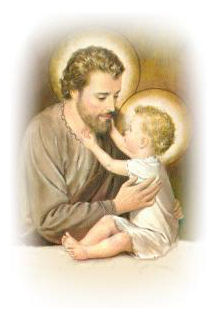
 I want to wish all the wonderful fathers a Happy Father's Day. I especially want to wish our loving God and St. Joseph a very Happy Father's Day.
And to my dear sweet Daddy, a very special Happy Father's Day. I wish I were there to celebrate with you and the rest of the family. I love you!!
To Sides of Giving
by Father John Catoir
3 Minutes a Day: A Christopher Book
June 18
After a long bus ride, a young husband and wife were sitting at a dinner table with their baby. They looked tired and not too prosperous. Their clothes were wrinkled and their breakfast seemed too light.
When the young husband received the check, his hand fumbled in his pocket and came up with some change. A look of dismay clearly revealed he didn't have enough to pay the bill.
At a neighboring table, another young husband had been observing them. He walked up to the father, shook his hand vigorously--passing a slip of green paper with it--and said, "congratulations on your beautiful baby!"
A grin of relief and gratitude shone on the young father's face.
Two aspects of giving are illustrated in this story. One is that in giving we should give gracefully, with sensitivity for the feelings of the person receiving the gift. The other is to be able to receive gifts graciously. That's a knack that is especially appreciated on Father's Day when fathers need to recognize the expressions of love behind the gifts they receive.
When you give alms, your left hand must not know what your right hand is doing. (Mt. 6:3)
Father of All, help fathers everywhere to appreciate their fatherhood and see in it a reflection of Your love for us.
---------
Some of you may be familiar with Fr. John Catoir as the former director of the Christophers or from his syndicated column in our diocesan newspapers. I have blessed to know him as the pastor of our church when I was growing up in Paterson. Thank you Fr. Catoir for all your daily inspirations as I read your little books.
 Formally known as Corpus Christi.
To commemorate this feast day, I would like to share a story someone shared with me. Thanks Sanju for this inspirational story of the Eucharist.
Source: MICHAEL
On July 18, 1946, Father Gino C. Violini stood before a small wooden church in a little town nestled in the foothills of the Canadian Rockies in Southern Alberta. St. Joseph's was a forlorn, nearly-abandoned little mission church.
A small group of people gathered around this man dressed in mourning. They said they didn't need a priest; Cowley didn't need a priest, and if it ever came to pass that they needed one, they would inform Bishop Carroll of the fact. Furthermore, they didn't want to see him reading his breviary, and he could get rid of that cassock.
He celebrated his first Mass at St. Joseph's the following Sunday. There were nine people in the pews. Well, he had to start somewhere, and he delivered the best sermon ever, in his opinion, to those nine people. The following Sunday, there were only four who had come to adore their God.
The next two years were not crowned with success. The collection was laughable. He could afford a loaf of bread which he'd cut into seven parts, one part for each day of the week, and feasted on dandelion salad. Winter is an especially cruel season in Cowley, and he'd find his blankets snow covered when he awoke in the morning, as the rectory walls were split open from the many seasons that had dried and shrunk the logs apart. His first Christmas collection was a dollar and thirteen cents. The church was no warmer than the rectory, so the water would freeze in the cruets, even though he placed them on a little coal stove.
Father had had it. One day he sat down and wrote a sixteen-page letter, addressed to Bishop Francis P. Carroll, the gist of which was — this town is a write-off, and I want to stamp the dust of it off my feet. The Bishop rejected each and all of his requests for a transfer, and told him to stay put. He had full confidence in Father Violini, and he expected him to bring about a full Catholic revival in this parish, which had been so long neglected. After the latest of these rebuffs, Father was ready to pray for a noble death. But he was in for a great revelation.
On the feast of Corpus Christi, he awoke early and headed for the church for morning prayers. As he walked to the church, he noticed the front door hanging off its hinges. He hurried in and gazed at a scene of great destruction. The walls were in shambles, the statues destroyed and then he noticed the tabernacle had been split open and the consecrated Hosts were scattered down the main aisle. One by one, he gathered them up, counting each one. They were all there except the large Benediction Host which he could find nowhere.
It was raining, The gray sky reflected his anguish. He notified Father Harrington of the Crowsnest deanery who quickly organized a search party of some two-thousand people. They searched Bellevue and Hillcrest, Blairemore and Coleman; some came from as far as Michel and Natal in British Columbia, yet none of the people of Cowley would help. The search party combed miles of Highway 3. The Royal Canadian Mounted Police picked up two suspects at Cowley, and questioned them at Blairemore. They had stolen a pickup truck, and abandoned it down the highway when the police had discovered them.
Father Gino recognized them as transients from Lethbridge who had been seated next to him at a baseball game a couple days before, and who were looking to find work in the coal mines at Crowsnest Pass. He listened to the questioning by Sergeant Parsons: “Remember, it may not mean much to you or to me, but you fellows stole his Jesus.” Father explained the meaning of the Blessed Sacrament to them, and how precious it is to Catholics. He then offered to drop all the charges if they would tell him where they had discarded the Host.
Touched by his explanation, they began to show remorse and offered to help find It. One admitted to having discarded it through the truck window just before the police took them into custody. He didn't know what it was, but he knew it was incriminating evidence. The rain had hardly stopped when they all piled into the police cruiser, the two suspects still handcuffed. Father calculated that if the Host had been dropped as these two men had said, the search parties would surely have found it if the rain had not dissolved it. It was about six o'clock that evening when they arrived at the spot. The sky was clearing; there was a bit of blue in the West.
As they rounded a corner east of Bellevue, they all saw the Host suspended in midair beside the highway. Beautiful rays of coloured light shone from it. Even before the car had stopped, Father leaped from the car and ran towards this astonishing sight. Sergeant Parsons was right behind him. Father fell to his knees in adoration, overcome with joy and wonder. Sergeant Parsons did likewise, and landed in a pool of mud.
Father stood up and reached for the Host. It looked as white and fresh as the day he had consecrated it. As he touched it, they heard: “Father Gino, please take me back to Cowley.”
Here was Christ on the road, asking to be returned to a desecrated church; to a parish that Father had long wanted to leave. As they returned to Cowley, Sergeant Parson's eyes constantly left the road to gaze at the wonder Father held there, beside him. The Bishop arrived the next day. He told Father Gino that he would be the one to rededicate the church. The Bishop prayed with him in the devastated sanctuary. As he finished, he turned to Father Gino to say: “Great changes will soon take place in this parish.”
Sergeant Parsons came to ask for instruction a few days later. His wife and children soon joined him, and later two of his constables from Pincher Creek. As time went on, more and more Catholics began to return to their church. The parish mission was so popular that the beer hall shut down when it was in progress. The patrons, many of whom were not Catholic, would carry the bar stools to the church to listen to Father's sermons. They even had to take out the pot-bellied stove to make room for everyone.
The little church, so long abandoned, was now full to overflowing every Sunday.
Paul Fournier