Thank you Martha!
The story goes that some time ago a mother punished her five year old daughter for wasting a roll of expensive gold wrapping paper. Money was tight and she became even more upset when the child used the gold paper to decorate a box to put under the Christmas tree.
Nevertheless, the little girl brought the gift box to her mother the next morning and then said, "This is for you, Momma."
The mother was embarrassed by her earlier over reaction, but her anger flared again when she opened the box and found it was empty. She spoke to her daughter in a harsh manner.
"Don't you know, young lady, when you give someone a present there's supposed to be something inside the package?"
She had tears in her eyes and said, "Oh, Momma, it's not empty! I blew kisses into it until it was full."
The mother was crushed. She fell on her knees and put her arms around her little girl, and she begged her forgiveness for her thoughtless anger.
An accident took the life of the child only a short time later, and it is told that the mother kept that gold box by her bed for all the years of her life.
Whenever she was discouraged or faced difficult problems she would open the box and take out an imaginary kiss and remember the love of the child who had put it there.
In a very real sense, each of us, as human beings, have been given a Golden box filled with unconditional love and kisses from our children, family, friends and GOD. There is no more precious possession anyone could hold.

Saturday, November 25, 2006


From Joseph Ratzinger's "Jesus of Nazareth"
"A Historically Honest and Convincing Figure"
VATICAN CITY, NOV. 23, 2006 (Zenit.org).- Here is a translation of excerpts from the Preface of the first volume of the book "Jesus of Nazareth," which Joseph Ratzinger-Benedict XVI will publish next spring. The excerpts were made available by Rizzoli, the publishing house that has been given the international rights.
* * *
PREFACE
I have come to the book on Jesus, the first part of which I now present, following a long interior journey. In the period of my youth -- the thirties and forties -- a series of fascinating books were published on Jesus. I remember the name of some of the authors: Karl Adam, Romano Guardini, Franz Michel Willam, Giovanni Papini, Jean Daniel-Rops. In all these books, the image of Jesus Christ was delineated from the Gospels: how he lived on earth and how, despite his being fully man, at the same time he led men to God, with whom, as Son, he was but one. Thus, through the man Jesus, God was made visible and from God the image of the just man could be seen.
Beginning in the fifties, the situation changed. The split between the "historical Jesus" and the "Christ of faith" became ever greater: One was rapidly removed from the other. However, what meaning could faith in Jesus Christ have, in Jesus the Son of the living God, if the man Jesus was so different from the way he was presented by the evangelists and the way he is proclaimed by the Church from the Gospels? Progress in historical-critical research led to ever more subtle distinctions between the different strata of tradition. In the wake of this research, the figure of Jesus, on which faith leans, became ever more uncertain, it took on increasingly less defined features.
At the same time, reconstructions of this Jesus, who should be sought after the traditions of the evangelists and their sources, became ever more contradictory: from the revolutionary enemy of the Romans who opposed the established power and naturally failed, to the gentle moralist who allowed everything and inexplicably ended up by causing his own ruin.
Whoever reads a few of these reconstructions can see immediately that they are more photographs of the authors and their ideals than a real questioning of an image that has become confused. Meanwhile, mistrust was growing toward these images of Jesus, and the figure itself of Jesus was ever more removed from us.
All these attempts have left in their wake, as common denominator, the impression that we know very little about Jesus, and that only later faith in his divinity has formed his image. Meanwhile, this image has been penetrating profoundly in the common consciousness of Christianity. Such a situation is tragic for the faith, because it makes its authentic point of reference uncertain: intimate friendship with Jesus, from whom everything depends, is debated and runs the risk of becoming useless. [...]
I have felt the need to give readers these indications of a methodological character so that they can determine the path of my interpretation of the figure of Jesus in the New Testament. With reference to my interpretation of Jesus, this means first of all that I trust the Gospels. Of course I take as a given all that the Council and modern exegesis say about the literary genres, the intention of their affirmations, on the communal context of the Gospels and its words in this living context. Accepting all this in the measure that was possible to me, I wished to present the Jesus of the Gospels as the true Jesus, as the "historical Jesus" in the true sense of the expression.
I am convinced, and I hope the reader will also realize, that this figure is far more logical and, from the historical point of view, also more comprehensible than the reconstructions we have had to deal with in the last decades.
I believe, in fact, that this Jesus -- the one of the Gospels -- is a historically honest and convincing figure. The Crucifixion and its efficacy can only be explained if something extraordinary happened, if Jesus' figure and words radically exceeded all the hopes and expectations of the age.
Approximately twenty years after Jesus' death, we find fully displayed in the great hymn to Christ that is the Letter to the Philippians (2:6-8) a Christology which says that Jesus was equal to God but that he stripped himself, became man, humbled himself unto death on the cross and that to him is owed the homage of creation, the adoration that in the prophet Isaiah (45:23) God proclaimed is owed only to Him.
With good judgment, critical research asks the question: What happened in the twenty years after Jesus' Crucifixion? How was this Christology arrived at?
The action of anonymous community formations, of which attempts are made to find exponents, in fact does not explain anything. How would it be possible for groups of unknowns to be so creative, so convincing to the point of imposing themselves in this way? Is it not more logical, also from the historical point of view, that greatness be found in the origin and that the figure of Jesus break all available categories and thus be understood only from the mystery of God?
Of course, to believe that though being man He "was" God and to make this known shrouding it in parables and in an ever clearer way, goes beyond the possibilities of the historical method. On the contrary, if from this conviction of faith the texts are read with the historical method and the opening is greater, the texts open to reveal a path and a figure that are worthy of faith. Also clarified then is the struggle at other levels present in the writings of the New Testament around the figure of Jesus and despite all the differences, one comes to profound agreement with these writings.
Of course with this vision of the figure of Jesus I go beyond what, for example, Schnackenburg says in representation of the greater part of contemporary exegesis. I hope, on the contrary, that the reader will understand that this book has not been written against modern exegesis, but with great recognition of all that it continues to give us.
It has made us aware of a great quantity of sources and concepts through which the figure of Jesus can become present with a vivacity and profundity that only a few decades ago we could not even imagine. I have attempted to go beyond the mere historical-critical interpretation applying new methodological criteria, which allows us to make a properly theological interpretation of the Bible and that naturally requires faith, without by so doing wanting in any way to renounce historical seriousness. I do not think it is necessary to say expressly that this book is not at all a magisterial act, but the expression of my personal seeking of the "Lord's face" (Psalm 27:8). Therefore, every one has the liberty to contradict me. I only ask from women and men readers the anticipation of sympathy without which there is no possible understanding.
As I already mentioned at the beginning of this Preface, the interior journey to this book has been long. I was able to begin work on it during my vacation of 2003. In August 2004, Chapters 1 to 4 took their final form. Following my election to the episcopal See of Rome I have used all the free moments I have had to carry on with it. Given that I do not know how much time and how much strength will still be given to me, I have decided to publish now as the first part of the book the first ten chapters that extend from the Baptism in the Jordan to Peter's confession and the Transfiguration.
[Translation by ZENIT. The official translation will be published in the book]
ZE06112301
VATICAN CITY, NOV. 23, 2006 (Zenit.org).- Here is a translation of excerpts from the Preface of the first volume of the book "Jesus of Nazareth," which Joseph Ratzinger-Benedict XVI will publish next spring. The excerpts were made available by Rizzoli, the publishing house that has been given the international rights.
* * *
PREFACE
I have come to the book on Jesus, the first part of which I now present, following a long interior journey. In the period of my youth -- the thirties and forties -- a series of fascinating books were published on Jesus. I remember the name of some of the authors: Karl Adam, Romano Guardini, Franz Michel Willam, Giovanni Papini, Jean Daniel-Rops. In all these books, the image of Jesus Christ was delineated from the Gospels: how he lived on earth and how, despite his being fully man, at the same time he led men to God, with whom, as Son, he was but one. Thus, through the man Jesus, God was made visible and from God the image of the just man could be seen.
Beginning in the fifties, the situation changed. The split between the "historical Jesus" and the "Christ of faith" became ever greater: One was rapidly removed from the other. However, what meaning could faith in Jesus Christ have, in Jesus the Son of the living God, if the man Jesus was so different from the way he was presented by the evangelists and the way he is proclaimed by the Church from the Gospels? Progress in historical-critical research led to ever more subtle distinctions between the different strata of tradition. In the wake of this research, the figure of Jesus, on which faith leans, became ever more uncertain, it took on increasingly less defined features.
At the same time, reconstructions of this Jesus, who should be sought after the traditions of the evangelists and their sources, became ever more contradictory: from the revolutionary enemy of the Romans who opposed the established power and naturally failed, to the gentle moralist who allowed everything and inexplicably ended up by causing his own ruin.
Whoever reads a few of these reconstructions can see immediately that they are more photographs of the authors and their ideals than a real questioning of an image that has become confused. Meanwhile, mistrust was growing toward these images of Jesus, and the figure itself of Jesus was ever more removed from us.
All these attempts have left in their wake, as common denominator, the impression that we know very little about Jesus, and that only later faith in his divinity has formed his image. Meanwhile, this image has been penetrating profoundly in the common consciousness of Christianity. Such a situation is tragic for the faith, because it makes its authentic point of reference uncertain: intimate friendship with Jesus, from whom everything depends, is debated and runs the risk of becoming useless. [...]
I have felt the need to give readers these indications of a methodological character so that they can determine the path of my interpretation of the figure of Jesus in the New Testament. With reference to my interpretation of Jesus, this means first of all that I trust the Gospels. Of course I take as a given all that the Council and modern exegesis say about the literary genres, the intention of their affirmations, on the communal context of the Gospels and its words in this living context. Accepting all this in the measure that was possible to me, I wished to present the Jesus of the Gospels as the true Jesus, as the "historical Jesus" in the true sense of the expression.
I am convinced, and I hope the reader will also realize, that this figure is far more logical and, from the historical point of view, also more comprehensible than the reconstructions we have had to deal with in the last decades.
I believe, in fact, that this Jesus -- the one of the Gospels -- is a historically honest and convincing figure. The Crucifixion and its efficacy can only be explained if something extraordinary happened, if Jesus' figure and words radically exceeded all the hopes and expectations of the age.
Approximately twenty years after Jesus' death, we find fully displayed in the great hymn to Christ that is the Letter to the Philippians (2:6-8) a Christology which says that Jesus was equal to God but that he stripped himself, became man, humbled himself unto death on the cross and that to him is owed the homage of creation, the adoration that in the prophet Isaiah (45:23) God proclaimed is owed only to Him.
With good judgment, critical research asks the question: What happened in the twenty years after Jesus' Crucifixion? How was this Christology arrived at?
The action of anonymous community formations, of which attempts are made to find exponents, in fact does not explain anything. How would it be possible for groups of unknowns to be so creative, so convincing to the point of imposing themselves in this way? Is it not more logical, also from the historical point of view, that greatness be found in the origin and that the figure of Jesus break all available categories and thus be understood only from the mystery of God?
Of course, to believe that though being man He "was" God and to make this known shrouding it in parables and in an ever clearer way, goes beyond the possibilities of the historical method. On the contrary, if from this conviction of faith the texts are read with the historical method and the opening is greater, the texts open to reveal a path and a figure that are worthy of faith. Also clarified then is the struggle at other levels present in the writings of the New Testament around the figure of Jesus and despite all the differences, one comes to profound agreement with these writings.
Of course with this vision of the figure of Jesus I go beyond what, for example, Schnackenburg says in representation of the greater part of contemporary exegesis. I hope, on the contrary, that the reader will understand that this book has not been written against modern exegesis, but with great recognition of all that it continues to give us.
It has made us aware of a great quantity of sources and concepts through which the figure of Jesus can become present with a vivacity and profundity that only a few decades ago we could not even imagine. I have attempted to go beyond the mere historical-critical interpretation applying new methodological criteria, which allows us to make a properly theological interpretation of the Bible and that naturally requires faith, without by so doing wanting in any way to renounce historical seriousness. I do not think it is necessary to say expressly that this book is not at all a magisterial act, but the expression of my personal seeking of the "Lord's face" (Psalm 27:8). Therefore, every one has the liberty to contradict me. I only ask from women and men readers the anticipation of sympathy without which there is no possible understanding.
As I already mentioned at the beginning of this Preface, the interior journey to this book has been long. I was able to begin work on it during my vacation of 2003. In August 2004, Chapters 1 to 4 took their final form. Following my election to the episcopal See of Rome I have used all the free moments I have had to carry on with it. Given that I do not know how much time and how much strength will still be given to me, I have decided to publish now as the first part of the book the first ten chapters that extend from the Baptism in the Jordan to Peter's confession and the Transfiguration.
[Translation by ZENIT. The official translation will be published in the book]
ZE06112301
Website Highlight
The previous writing by St. Alphonsus de Ligouri came from Purgatorian Archconfraternity. CLICK HERE to learn more about becoming a member. Usually,
Note: I usually check out a site's links to see if they list sites that would not be approved by the Church. This one does not seem to have a links page. If anyone finds this site to be objectionable, such as belonging to ultra traditional Catholics, please let me know.
Note: I usually check out a site's links to see if they list sites that would not be approved by the Church. This one does not seem to have a links page. If anyone finds this site to be objectionable, such as belonging to ultra traditional Catholics, please let me know.
A Christian Duty
H/T to Sue 
By Saint Alphonsus Maria de Liguori
The practice of recommending to God the souls in Purgatory, that He might mitigate the great pains which they suffer, and that He may soon bring them to His glory, is most pleasing to the Lord and most profitable to us. For these blessed souls are His eternal spouses, and most grateful are they to those who obtain their deliverance from prison, or even a mitigation of their torments. When, therefore, they arrive in Heaven, they will be sure to remember all who have prayed for them. It is a pious belief that God manifests to them our prayers in their behalf, that they may also pray for us. It is true that these blessed souls are not in a state to pray for themselves, because they are atoning for their faults. However, because they are very dear to God, they can pray for us, and obtain for us the divine graces. Saint Catherine of Bologna, when she wished to obtain any grace, had recourse to the souls in Purgatory, and her prayers were heard immediately. She declared that, by praying to those holy souls, she obtained many favours which she had sought through the intercession of the saints without obtaining them. The graces which devout persons are said to have received through these holy souls are innumerable.
But, if we wish for the aid of their prayers, it is just, it is even a duty, to relieve them by our suffrages. I say, it is even a duty: for Christian charity commands us to relieve our neighbors who stand in need of our assistance. But who among all our neighbors have so great need of our help as those holy prisoners? They are continually in that fire which torments more severely than any earthly fire. They are deprived of the sight of God, a torment far more excruciating than all other pains. Let us reflect that among these suffering souls are parents, or brothers, or relations and friends, who look to us for succour.
Let us remember, moreover, that being in the condition of debtors for their sins, they cannot assist themselves. This thought should urge us forward to relieve them to the best of our ability. By assisting them we shall not only give great pleasure to God, but will acquire also great merit for ourselves. And, in return for our suffrages, these blessed souls will not neglect to obtain for us many graces from God, but particularly the grace of eternal life. I hold for certain that when a soul delivered from Purgatory by the suffrages of a Christian enters paradise, she will not fail to say to God: “Lord, do not suffer that person to be lost who has liberated me from the prison of Purgatory, and has brought me to the enjoyment of Thy glory sooner than I had deserved.”

By Saint Alphonsus Maria de Liguori
The practice of recommending to God the souls in Purgatory, that He might mitigate the great pains which they suffer, and that He may soon bring them to His glory, is most pleasing to the Lord and most profitable to us. For these blessed souls are His eternal spouses, and most grateful are they to those who obtain their deliverance from prison, or even a mitigation of their torments. When, therefore, they arrive in Heaven, they will be sure to remember all who have prayed for them. It is a pious belief that God manifests to them our prayers in their behalf, that they may also pray for us. It is true that these blessed souls are not in a state to pray for themselves, because they are atoning for their faults. However, because they are very dear to God, they can pray for us, and obtain for us the divine graces. Saint Catherine of Bologna, when she wished to obtain any grace, had recourse to the souls in Purgatory, and her prayers were heard immediately. She declared that, by praying to those holy souls, she obtained many favours which she had sought through the intercession of the saints without obtaining them. The graces which devout persons are said to have received through these holy souls are innumerable.
But, if we wish for the aid of their prayers, it is just, it is even a duty, to relieve them by our suffrages. I say, it is even a duty: for Christian charity commands us to relieve our neighbors who stand in need of our assistance. But who among all our neighbors have so great need of our help as those holy prisoners? They are continually in that fire which torments more severely than any earthly fire. They are deprived of the sight of God, a torment far more excruciating than all other pains. Let us reflect that among these suffering souls are parents, or brothers, or relations and friends, who look to us for succour.
Let us remember, moreover, that being in the condition of debtors for their sins, they cannot assist themselves. This thought should urge us forward to relieve them to the best of our ability. By assisting them we shall not only give great pleasure to God, but will acquire also great merit for ourselves. And, in return for our suffrages, these blessed souls will not neglect to obtain for us many graces from God, but particularly the grace of eternal life. I hold for certain that when a soul delivered from Purgatory by the suffrages of a Christian enters paradise, she will not fail to say to God: “Lord, do not suffer that person to be lost who has liberated me from the prison of Purgatory, and has brought me to the enjoyment of Thy glory sooner than I had deserved.”
Papal Quote
HT to Sue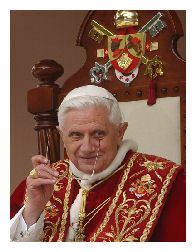
It is the reality of a family united by profound bonds of spiritual solidarity, which unites the faithful deceased with those on pilgrimage in the world. A mysterious bond, but real,
nourished by prayer and participation in the sacrament of the Eucharist. In the Mystical Body of Christ, the souls of the faithful meet, surmounting the barrier of death, pray for one another,
and realize in charity a profound exchange of gifts.
Pope Benedict XVI (October 31, 2005)

It is the reality of a family united by profound bonds of spiritual solidarity, which unites the faithful deceased with those on pilgrimage in the world. A mysterious bond, but real,
nourished by prayer and participation in the sacrament of the Eucharist. In the Mystical Body of Christ, the souls of the faithful meet, surmounting the barrier of death, pray for one another,
and realize in charity a profound exchange of gifts.
Pope Benedict XVI (October 31, 2005)
Friday, November 24, 2006
Expecting Jesus?
H/T to Karr
Ruth went to her mail box and there was only one letter.
She picked it up and looked at it before opening, but then she looked at the envelope again.
There was no stamp, no postmark, only her name and address.
She read the letter:
Dear Ruth:
I`m going to be in your neighborhood Saturday afternoon and I'd like to stop by for a visit.
Love Always,
Jesus
Her hands were shaking as she placed the letter on the table. "Why would the Lord want to visit me? I'm nobody special. I don't have anything to offer."
With that thought, Ruth remembered her empty kitchen cabinets.
"Oh my goodness, I really don't have anything to offer. I'll have to run down to the store and buy something for dinner."
She reached for her purse and counted out its contents. Five dollars and forty cents. Well, I can get some bread and cold cuts, at least." She threw on her coat and hurried out the door.
A loaf of French bread, a half-pound of sliced turkey, and a carton of milk...leaving Ruth with
grand total twelve cents to last her until Monday.
Nonetheless, she felt good as she headed home, her meager offerings tucked under her arm.
"Hey lady, can you help us,lady?"
Ruth had been so absorbed in her dinner plans, she hadn't even noticed two figures huddled in the alleyway.
A man and a woman, both of them dressed in little more than rags.
"Look lady, I ain't got a job, ya know, and my wife and I have been living out here on the street, and, well, now it's getting cold and we're getting kinda hungry and, well, if you could help us Lady, we'd really appreciate it."
Ruth looked at them both. They were dirty, they smelled bad and frankly, she was certain that they could get some kind of work if they really wanted to.
"Sir, I'd like to help you, but I'm a poor woman myself. All I have is a few cold cuts and some
bread, and I'm having an important guest for dinner tonight and I was planning on serving that to Him."
"Yeah, well, okay lady, I understand. Thanks anyway."
The man put his arm around the woman's shoulders, turned and headed back into the alley.
As she watched them leave, Ruth felt a familiar twinge in her heart.
"Sir, wait!"
The couple stopped and turned as sheran down the alley after them. "Look, why don't you take this food. I'll figure out something else to serve my guest." She handed the man her grocery bag.
"Thank you lady. Thank you very much!" "Yes, thank you!" It was the man's wife, and Ruth
could see now that she was shivering. "You know, I've got another coat at home.
Here, why don't you take this one." Ruth unbuttoned her jacket and slipped it over the
woman's shoulders. Then smiling, she turned and walked back to the street...without her coat and with nothing to serve her guest. "Thank you lady!
Thank you very much!"
Ruth was chilled by the time she reached her front door, and worried too. The Lord was coming to visit and she didn't have anything to offer Him.
She fumbled through her purse for the door key. But as she did, she noticed another envelope in her mailbox. "That's odd. The mailman doesn't usually come twice in one day."
Dear Ruth:
It was so good to see you again.
And thank you, too, for the beautiful coat.
Love Always,
Jesus
The air was still cold, but even without her coat,
Ruth no longer noticed.
Ruth went to her mail box and there was only one letter.
She picked it up and looked at it before opening, but then she looked at the envelope again.
There was no stamp, no postmark, only her name and address.
She read the letter:
Dear Ruth:
I`m going to be in your neighborhood Saturday afternoon and I'd like to stop by for a visit.
Love Always,
Jesus
Her hands were shaking as she placed the letter on the table. "Why would the Lord want to visit me? I'm nobody special. I don't have anything to offer."
With that thought, Ruth remembered her empty kitchen cabinets.
"Oh my goodness, I really don't have anything to offer. I'll have to run down to the store and buy something for dinner."
She reached for her purse and counted out its contents. Five dollars and forty cents. Well, I can get some bread and cold cuts, at least." She threw on her coat and hurried out the door.
A loaf of French bread, a half-pound of sliced turkey, and a carton of milk...leaving Ruth with
grand total twelve cents to last her until Monday.
Nonetheless, she felt good as she headed home, her meager offerings tucked under her arm.
"Hey lady, can you help us,lady?"
Ruth had been so absorbed in her dinner plans, she hadn't even noticed two figures huddled in the alleyway.
A man and a woman, both of them dressed in little more than rags.
"Look lady, I ain't got a job, ya know, and my wife and I have been living out here on the street, and, well, now it's getting cold and we're getting kinda hungry and, well, if you could help us Lady, we'd really appreciate it."
Ruth looked at them both. They were dirty, they smelled bad and frankly, she was certain that they could get some kind of work if they really wanted to.
"Sir, I'd like to help you, but I'm a poor woman myself. All I have is a few cold cuts and some
bread, and I'm having an important guest for dinner tonight and I was planning on serving that to Him."
"Yeah, well, okay lady, I understand. Thanks anyway."
The man put his arm around the woman's shoulders, turned and headed back into the alley.
As she watched them leave, Ruth felt a familiar twinge in her heart.
"Sir, wait!"
The couple stopped and turned as sheran down the alley after them. "Look, why don't you take this food. I'll figure out something else to serve my guest." She handed the man her grocery bag.
"Thank you lady. Thank you very much!" "Yes, thank you!" It was the man's wife, and Ruth
could see now that she was shivering. "You know, I've got another coat at home.
Here, why don't you take this one." Ruth unbuttoned her jacket and slipped it over the
woman's shoulders. Then smiling, she turned and walked back to the street...without her coat and with nothing to serve her guest. "Thank you lady!
Thank you very much!"
Ruth was chilled by the time she reached her front door, and worried too. The Lord was coming to visit and she didn't have anything to offer Him.
She fumbled through her purse for the door key. But as she did, she noticed another envelope in her mailbox. "That's odd. The mailman doesn't usually come twice in one day."
Dear Ruth:
It was so good to see you again.
And thank you, too, for the beautiful coat.
Love Always,
Jesus
The air was still cold, but even without her coat,
Ruth no longer noticed.
How to Help Empty Purgatory
 Picture courtesy of My Catholic Tradition
This is a prayer which I say daily. I hope you will too.
Prayer of St. Gertrude the Great
A prayer Jesus promised her will release 1,000 souls from Purgatory each time it is said.
Eternal Father,
I offer Thee the most precious blood of Thy Divine Son, Jesus,
in union with the Masses said throughout the world today,
for all the Holy Souls in Purgatory,
for sinners everywhere,
for sinners in the universal church,
those in my own home
and within my family.
Amen
Liturgically Celebrating Christmas: Avoiding the Wishbook Syndrome
H/T to Kaylan
The letdown the day after Christmas was palpable. The tree seemed naked with no presents underneath it. For the first time, we noticed how dry the needles looked. By New Year’s, the tree came down, and January’s great gloom loomed ahead. After all the hype and all the anticipation, nothing could ever live up to the wish book’s promise.Want to read more? Well Click Here for the entire article.
When I had kids of my own, I wanted something different for them.
My husband had an answer. "Why don’t we celebrate Christmas liturgically?" Tim asked me. "That’s what we always did in my family."
Thursday, November 23, 2006
New Movie - Guadalupe
Film "Guadalupe" to Open in U.S.
MEXICO CITY, NOV. 21, 2006 (Zenit.org).- A film on the miracle of Our Lady of Guadalupe and its impact on Mexican life will be released Dec. 8 in the United States.
The movie "Guadalupe" is being released in the context of celebrations for the 475th anniversary of the apparitions to St. Juan Diego at Tepeyac.
Director Santiago Parra, a native of Ecuador, filmed scenes of the movie in Europe and the Americas. The film was produced by the company Dos Corazones (Two Hearts).
Parra said the film tries to capture the Guadalupan fervor of Mexico by a foreign director who is able to see profoundly what many Mexicans do not see.
His team and cast members were advised by the Higher Institute of Guadalupan Studies.
The world premiere will take place in 150 cinemas of Mexico on Nov. 30.
The film's official Web page is Guadalupe.
ZE06112122
MEXICO CITY, NOV. 21, 2006 (Zenit.org).- A film on the miracle of Our Lady of Guadalupe and its impact on Mexican life will be released Dec. 8 in the United States.
The movie "Guadalupe" is being released in the context of celebrations for the 475th anniversary of the apparitions to St. Juan Diego at Tepeyac.
Director Santiago Parra, a native of Ecuador, filmed scenes of the movie in Europe and the Americas. The film was produced by the company Dos Corazones (Two Hearts).
Parra said the film tries to capture the Guadalupan fervor of Mexico by a foreign director who is able to see profoundly what many Mexicans do not see.
His team and cast members were advised by the Higher Institute of Guadalupan Studies.
The world premiere will take place in 150 cinemas of Mexico on Nov. 30.
The film's official Web page is Guadalupe.
ZE06112122
Listening to God
Mahalo to Sue, who shares the best lessons with me.
A young man had been to a midweek evening Mass. The Pastor had spoken during his homily about listening to God and obeying the Lord's voice. The young man couldn't help but wonder, "Does God still speak to people?" After the Mass, he went out with some friends for coffee and pie and they discussed the message. Several different ones talked about how God had led them in different ways.
It was about ten o'clock when the young man started driving home. Sitting in his car, he just began to pray, "God...If you still speak to people speak to me. I will listen. I will do my best to obey."
As he drove down the main street of his town, he had the strangest thought to stop and buy a gallon of milk. He shook his head and said out loud, "God is that you?" He didn't get a reply and started on toward home.
But again, the thought, buy a gallon of milk. The young man thought about Samuel and how he didn't recognize the voice of God, and how little Samuel ran to Eli. "Okay, God, in case that is you, I will buy the milk." It didn't seem like too hard a test of obedience. He could always use the milk. He stopped and purchased the gallon of milk and started off toward home.
As he passed Seventh Street, he again felt the urge, "Turn down that street." This is crazy he thought and drove on past the intersection. Again, he felt that he should turn down Seventh Street. At the next intersection, he turned back and headed down Seventh. Half jokingly, he said out loud, "Okay, God, I will."
He drove several blocks, when suddenly, he felt like he should stop. He pulled over to the curb and looked around. He was in a semi-commercial area of town. It wasn't the best but it wasn't the worst of neighborhoods either. The businesses were closed and most of the houses looked dark like the people were already in bed. Again, he sensed something, "Go and give the milk to the people in the house across the street."
The young man looked at the house. It was dark and it looked like the people were either gone or they were already asleep. He started to open the door and then sat back in the car seat. "Lord, this is insane. Those people are asleep and if I wake them up, they are going to be mad and I will look stupid."
Again, he felt like he should go and give the milk. Finally, he opened the door. "Okay God, if this is you, I will go to the door and I will give them the milk. If you want me to look like a crazy person, okay. I want to be obedient. I guess that will count for something but if they don't answer right away, I am out of here. He walked across the street and rang the bell.
He could hear some noise inside. A man's voice yelled out, "Who is it? What do you want?" Then the door opened before the young man could get away. The man was standing there in his jeans and tee-shirt. He looked like he just got out of bed. He had a strange look on his face and he didn't seem too happy to have some stranger standing on his doorstep. "What is it?" The young man thrust out the gallon of milk. "Here I brought this to you."
The man took the milk and rushed down a hallway, speaking loudly in Spanish. Then from down the hall came a woman carrying the milk toward the kitchen. The man was following her holding a baby. The baby was crying. The man had tears streaming down his face. The man began speaking and half-crying, "We were just praying. We had some big bills this month and we ran out of money. We didn't have any milk for our baby. I was just praying and asking God to show me how to get some milk."
His wife in the kitchen yelled out, "I asked him to send an Angel with some. Are you an Angel?"
The young man reached into his wallet and pulled out all the money he had on him and put in the man's hand. He turned and walked back toward his car and the tears were streaming down his face. He knew that God still answers prayers.
"Stop telling God how big your storm is. Instead, tell the storm how big your God is! "
A young man had been to a midweek evening Mass. The Pastor had spoken during his homily about listening to God and obeying the Lord's voice. The young man couldn't help but wonder, "Does God still speak to people?" After the Mass, he went out with some friends for coffee and pie and they discussed the message. Several different ones talked about how God had led them in different ways.
It was about ten o'clock when the young man started driving home. Sitting in his car, he just began to pray, "God...If you still speak to people speak to me. I will listen. I will do my best to obey."
As he drove down the main street of his town, he had the strangest thought to stop and buy a gallon of milk. He shook his head and said out loud, "God is that you?" He didn't get a reply and started on toward home.
But again, the thought, buy a gallon of milk. The young man thought about Samuel and how he didn't recognize the voice of God, and how little Samuel ran to Eli. "Okay, God, in case that is you, I will buy the milk." It didn't seem like too hard a test of obedience. He could always use the milk. He stopped and purchased the gallon of milk and started off toward home.
As he passed Seventh Street, he again felt the urge, "Turn down that street." This is crazy he thought and drove on past the intersection. Again, he felt that he should turn down Seventh Street. At the next intersection, he turned back and headed down Seventh. Half jokingly, he said out loud, "Okay, God, I will."
He drove several blocks, when suddenly, he felt like he should stop. He pulled over to the curb and looked around. He was in a semi-commercial area of town. It wasn't the best but it wasn't the worst of neighborhoods either. The businesses were closed and most of the houses looked dark like the people were already in bed. Again, he sensed something, "Go and give the milk to the people in the house across the street."
The young man looked at the house. It was dark and it looked like the people were either gone or they were already asleep. He started to open the door and then sat back in the car seat. "Lord, this is insane. Those people are asleep and if I wake them up, they are going to be mad and I will look stupid."
Again, he felt like he should go and give the milk. Finally, he opened the door. "Okay God, if this is you, I will go to the door and I will give them the milk. If you want me to look like a crazy person, okay. I want to be obedient. I guess that will count for something but if they don't answer right away, I am out of here. He walked across the street and rang the bell.
He could hear some noise inside. A man's voice yelled out, "Who is it? What do you want?" Then the door opened before the young man could get away. The man was standing there in his jeans and tee-shirt. He looked like he just got out of bed. He had a strange look on his face and he didn't seem too happy to have some stranger standing on his doorstep. "What is it?" The young man thrust out the gallon of milk. "Here I brought this to you."
The man took the milk and rushed down a hallway, speaking loudly in Spanish. Then from down the hall came a woman carrying the milk toward the kitchen. The man was following her holding a baby. The baby was crying. The man had tears streaming down his face. The man began speaking and half-crying, "We were just praying. We had some big bills this month and we ran out of money. We didn't have any milk for our baby. I was just praying and asking God to show me how to get some milk."
His wife in the kitchen yelled out, "I asked him to send an Angel with some. Are you an Angel?"
The young man reached into his wallet and pulled out all the money he had on him and put in the man's hand. He turned and walked back toward his car and the tears were streaming down his face. He knew that God still answers prayers.
"Stop telling God how big your storm is. Instead, tell the storm how big your God is! "
Subscribe to:
Posts (Atom)