Picture courtesy of St. Columbkille
The following was posted over at the Roman Catholic Blog
SKYLSTAD-VESSELS Oct-24-2006
Lay ministers may not cleanse Communion vessels, Pope Benedict says
By Nancy Frazier O'Brien
Catholic News Service
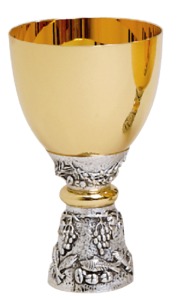
WASHINGTON (CNS) -- At the direction of Pope Benedict XVI, extraordinary ministers of holy Communion will no longer be permitted to assist in the purification of the sacred vessels at Masses in the United States.
In an Oct. 23 letter, Bishop William S. Skylstad, president of the U.S. Conference of Catholic Bishops, asked his fellow bishops to inform all pastors of the change, which was prompted by a letter from Cardinal Francis Arinze, prefect of the Vatican Congregation for Divine Worship and the Sacraments.
The U.S. bishops had asked the Vatican to extend an indult -- or church permission -- in effect since 2002 allowing extraordinary ministers of holy Communion to help cleanse the Communion cups and plates when there were not enough priests or deacons to do so.
Bishop Skylstad, who heads the Diocese of Spokane, Wash., said Cardinal Arinze asked Pope Benedict about the matter during a June 9 audience, "and received a response in the negative."
Noting that the General Instruction of the Roman Missal "directs that the sacred vessels are to be purified by the priest, the deacon or an instituted acolyte," the cardinal said in his Oct. 12 letter that "it does not seem feasible, therefore, for the congregation to grant the requested indult from this directive in the general law of the Latin Church."
Although receiving Communion under both kinds is a "more complete" sign of the sacrament's meaning, Cardinal Arinze said, "Christ is fully present under each of the species."
"Communion under the species of the bread alone, as a consequence, makes it possible to receive all the fruit of eucharistic grace," he added.
Another "legitimate option" when "the high number of communicants may render it inadvisable for everyone to drink from the chalice" is intinction -- the practice of dipping the consecrated host into the consecrated wine -- "with reception on the tongue always and everywhere," the cardinal's letter said.
Along with the letters from Bishop Skylstad and Cardinal Arinze, bishops received a new resource prepared by the bishops' Committee on the Liturgy titled "Seven Questions on the Distribution of Holy Communion Under Both Kinds."
The committee document also suggested distribution of Communion by consecrated bread alone or by intinction when the number of communicants makes the purification of vessels by priests, deacons or instituted acolytes alone "pastorally problematic."
"Priests should also keep in mind potential risks associated with intinction, especially in the coming flu season," the document added.
The committee said extraordinary ministers of holy Communion may continue to "consume what remains of the precious blood from their chalice of distribution with permission of the diocesan bishop."
The document notes that the "extraordinary ministry" by which laypeople distribute Communion "was created exclusively for those instances where there are not enough ordinary ministers to distribute holy Communion, due to the consummate importance of assuring that the faithful have the opportunity to receive holy Communion at Mass, even when it is distributed under both species."
Ordinary ministers of Communion are priests and deacons, with instituted acolytes being permitted in the Roman Missal to help the priest or deacon "to purify and arrange the sacred vessels."
In the United States, instituted acolytes, who must be male, generally are seminarians preparing for priesthood.
END

 The artist is a former Hawaii Catholic homeschooler William. My friend emailed me these photos recently and I told her I'd to share them with others by posting them on my blog.
As you can see by the photo, William creates his masterpieces in wire. He seems to have captured the graceful movement of the horse, hasn't he?
The artist is a former Hawaii Catholic homeschooler William. My friend emailed me these photos recently and I told her I'd to share them with others by posting them on my blog.
As you can see by the photo, William creates his masterpieces in wire. He seems to have captured the graceful movement of the horse, hasn't he?
 The Blessed Sacrament during Adoration. That is a portrait of Blessed Marianne Cope in the background.
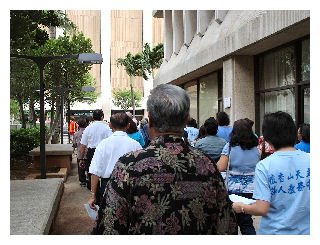
This is the first Eucharistic Procession that my family and I were privileged to attend. It was so heartwarming seeing so many people there loving and adoring our Lord, together with our Bishop, priests, sisters, the Knights of Columbus.
The purpose of this day was in part was to pray for vocations. I believe I recognized a couple of seminarians in the pews. Please pray for them and for our bishop, Larry Silva, and for all our priests and religious.
Mahalo Nui Loa Bishop Silva.
The Blessed Sacrament during Adoration. That is a portrait of Blessed Marianne Cope in the background.
This is the first Eucharistic Procession that my family and I were privileged to attend. It was so heartwarming seeing so many people there loving and adoring our Lord, together with our Bishop, priests, sisters, the Knights of Columbus.
The purpose of this day was in part was to pray for vocations. I believe I recognized a couple of seminarians in the pews. Please pray for them and for our bishop, Larry Silva, and for all our priests and religious.
Mahalo Nui Loa Bishop Silva.
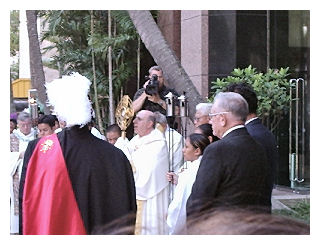
 The final blessing and prayers before re-entering the Cathedral.

A better shot of Bishop Silva carrying the Monstrance and making a blessing.
 The first time the Bishop (Silva) stops during the Procession to bless the people.

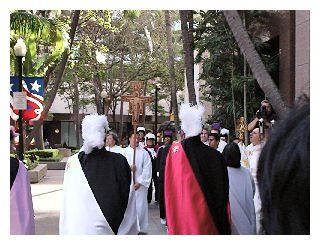
We are processing out of the Cathedral and following the Blessed Sacrament.
 Father Stephanos of Me Monk, Me Meander (Don't you love that blog name?) posted an interesting story of a baseball player with a calling.
This story caught my eye for a few reasons:
1. Thanks to our Dad, my family has been diehard Mets fans since the 1970's. At the time the Mets were thinking of bringing Father Ed Cipot to play for the majors, my family and I were going to Shea Stadium on a regular basis. It was during this period of time that the Mets had the incredible pitching team of Tom Seaver, Jerry Koosman and my own personal favorite (and yes, I had a little crush on him) Jon Matlack. We actually met Jon Matlack and he autographed a baseball and a Mets photo album, but I digress...
2. Ed Cipot is a Jersey boy.
3. Ed Cipot became a priest.
As a side note, apparently, the Mets and Catholicism are no strangers. Our family friend, 97 year old priest Father Duffy, a native of Brooklyn and long-time Brooklyn Dodgers fan, was friends with Gil Hodges, (who was the manager of the Mets in the 70's). If I'm not mistaken, Mr. Hodges was a convert to Catholicism and Father Duffy invited him to his first Mass as a priest. It snowed heavily that day but Gil Hodges made it to the ordination. Father Duffy told me that Gil Hodges was quite the gentleman and a very nice guy.
So, if you'd like to read a very interesting story of a former "Boy of Summer" CLICK HERE
Father Stephanos of Me Monk, Me Meander (Don't you love that blog name?) posted an interesting story of a baseball player with a calling.
This story caught my eye for a few reasons:
1. Thanks to our Dad, my family has been diehard Mets fans since the 1970's. At the time the Mets were thinking of bringing Father Ed Cipot to play for the majors, my family and I were going to Shea Stadium on a regular basis. It was during this period of time that the Mets had the incredible pitching team of Tom Seaver, Jerry Koosman and my own personal favorite (and yes, I had a little crush on him) Jon Matlack. We actually met Jon Matlack and he autographed a baseball and a Mets photo album, but I digress...
2. Ed Cipot is a Jersey boy.
3. Ed Cipot became a priest.
As a side note, apparently, the Mets and Catholicism are no strangers. Our family friend, 97 year old priest Father Duffy, a native of Brooklyn and long-time Brooklyn Dodgers fan, was friends with Gil Hodges, (who was the manager of the Mets in the 70's). If I'm not mistaken, Mr. Hodges was a convert to Catholicism and Father Duffy invited him to his first Mass as a priest. It snowed heavily that day but Gil Hodges made it to the ordination. Father Duffy told me that Gil Hodges was quite the gentleman and a very nice guy.
So, if you'd like to read a very interesting story of a former "Boy of Summer" CLICK HERE
 Picture courtesy of Conception Abbey
Not that we should be monitoring how others behave in church but have you noticed that some folks walk right passed the Blessed Sacrament without genuflecting? Maybe some feel that the Church has done away with the rules on genuflecting.
My friend NASCAR enthusiast and writerBecca shared this one.
Q: Are we no longer required to genuflect toward the tabernacle when
we enter and leave the church? My priest doesn't even genuflect during Mass anymore. Is genuflection a thing of the past, a pre-Vatican II
pious superstition?
A: If you can find the tabernacle (not always easy these days), you are
expected to genuflect (reverently touching one knee to the floor)
toward it upon entering and leaving the church and whenever you pass in front of the Blessed Sacrament.
Some incorrectly bow toward the tabernacle instead of genuflecting. A profound bow, a bow of the body from the waist, is made toward the altar if there is no tabernacle with the Blessed Sacrament.
As to the priest's actions during Mass, the General Instruction of the Roman Missal (n. 233) states, "Three genuflections are made during Mass: after the showing of the Eucharistic bread, after the showing of the chalice, and before Communion. If there is a tabernacle with the
Blessed Sacrament in the sanctuary, a genuflection is made before and after Mass and whenever anyone passes in front of the Blessed Sacrament." Someone needs to let your priest know that at least three genuflections are required during Mass.
The failure of many to genuflect is a reflection of the loss of belief in the Real Presence of Christ in the Eucharist. If one doesn't believe Jesus is truly present, why make a sign of reverence? But we do, so its but proper to genuflect, as to the presence of Royalty. Did you know that people are "required" to do this in the presence of present day Queen Elizabeth? What more for God?
-adapted from Catholic Answers

H/T to MARCI
By Sue Schulzetenberg
10/10/2006
Catholic News Service
COLLEGEVILLE, Minn. (CNS) – With a twinkle in his eyes, a spring in his gestures and a cheerful, calming smile, Benedictine Father Angelo Zankl shines with his sunny perspective on life.
105-YEAR-OLD PRIEST IN RETIREMENT CENTER – Benedictine Father Angelo Zankl, a 105-year-old resident of St. John's Abbey Retirement Center in Collegeville, Minn., sits inside the facility in late July. Father Zankl has seen many changes in his 105 years, but says "he likes what he sees," and views life as a great thing. He says a positive attitude is one of the secrets to living a long and happy life. (CNS/St. Cloud Visitor)
"It is a great, great thing!" said the monk of St. John's Abbey in Collegeville about his long life in an interview with the St. Cloud Visitor, newspaper of the Diocese of St. Cloud.
He turned 105 in April, so his perspective comes with much experience.
In his lifetime there have been many changes. For example, he was 20 months old when Wilbur and Orville Wright made their historic Kitty Hawk, N.C., airplane flight.
And through life's changes, he has kept going with great energy. He celebrated the 80th jubilee of his ordination as a priest in June.
One object of his enthusiasm is God, whom Father Zankl credits as the one who provides a positive outlook on life.
God has "everything" to do with being a priest, he said. "He is all important."
Father Zankl's priestly assignments included being a pastor in Duluth, teacher and chaplain at a junior college in Crookston, chaplain of a nursing home in Cold Spring and chaplain to the Benedictine nuns in Duluth.
For the most part, Father Zankl has been blessed with good health and has bounced back from the bad.
"Like other people, I get sick and I get well again and just keep right on going," he said.
To keep going, he eats healthy foods. "I don't eat junk," he said.
He smoked a pipe until he was around 100 or 101 years old, but then gave it up, saying he didn't take a particular delight in it anymore.
As a pastime he enjoys reading "anything that comes along." If it's not good, he stops reading it. He especially enjoys reading newspapers.
"The important thing is you do what you like," he said. "When you can do what you like," a whole world of options opens up, he added.
One of Father Zankl's favorite things was teaching.
Educating children is important, he said. He taught everything about religion, which he described as a "wonderfully satisfying subject."
Along with teaching, he loved learning. After all, school was the place he learned what has carried him through many great years.
"That's where you learn life," he said.
 Yesterday we had an earthquake hit the islands of Hawaii. It is by no small miracle that no one was reported killed or seriously injured as a result of the earthquake.
I think the fact that we were safe from any catastrophic loss is due to God's protection, and to the protection of His Holy Mother and that of our our angels and saints. It is no by coincidence that a place that has so many devout and prayerful people, and that was consecrated to God's Divine Mercy, was spared.
Like my dear mom reminded me, we have to remember to thank Blessed Father Damien, Blessed Marianne Cope, our guardian angels, God's Divine Mercy and our Blessed Mother for the protection they offered us yesterday.
IN THANKSGIVING
Father of mercy,
You always answer Your people in their sufferings.
We thank You for Your kindness
and ask You to free us from all evil,
that we may serve You in happiness all our days. Amen.
PRAYER OF THANSGIVING AND PETITION
We Give You thanks,
O Christ, our God;
in Your goodness
You have given us Your Body in this Sacrament
to enable us to live holy lives.
Through Your grace
keep us pure and without stain.
Remain in us to protect us.
Direct our steps in the way
of Your holy and benevolent will.
Strengthen our souls
against the seduction of the devil
so that we may heed only Your voice and follow You alone,
O ommipotent and truthful Shepherd,
and attain the place prepared for us
in the kindgom of heaven:
O our God and Lord,
Redeemer Jesus Chrsit,
who are blessed
with the Father and the spirt
now and forever. Amen.
Prayers are from The New Saint Joseph People's Prayer Book
 Today was our EMHC annual meeting and mini retreat. The emphasis was on the Real Presence and how we as Extraordinary Ministers of Holy Communion should, by our example, teach others that Jesus is really present, Body, Blood, Soul and Divinity.
Which brings me to this post about improving the Liturgy. I happened to come across an ARTICLE by Arlene Oost-Zinner and Jeffrey Tucker, which to me, made a lot of sense. I will post the main points but be sure to read the entire article.
"Boredom during the liturgy is something all Catholics have felt from time to time, and it’s never justifiable. No matter how mundane the architecture, how dull the homily, or how bad the music, what’s taking place on the altar is a miraculous sacrifice that gives us the grace for salvation. That reality should be enough to keep our attention..."
"...There are, however, ways to break with routine and inspire steadfastness and personal attachment to the liturgy. What follows are 14 very simple steps for repairing the weaknesses that mar many U.S. Catholic liturgies. Professional liturgists resist them because of the prevailing bias against anything that smacks of a pre–Vatican II sensibility. Nonetheless, the following suggestions are born of experience and a conviction that the first aim of liturgy is to aid inner reflection.
The suggestions below are simple and costless. They need not be implemented all at once. Small changes week by week will make a huge difference over time."
1. Turn down the volume.
2. Chant for a prelude.
3. Curb the announcements.
4. Choose plain, traditional hymns for the processional.
5. Sing the Kyrie.
6. Choose a plainer Gloria.
7. Fix the Psalm.
8. The Offertory should be a time of preparation.
9. Reduce and simplify the ‘Mystery of Faith’ and the ‘Great Amen.’
10. Shorten the Sign of Peace.
11. Begin the communion chant (a simple Latin hymn will do) after the priest receives.
12. Don’t force people to sing during communion.
13. Allow for silence after communion.
14. Don’t attempt a rousing good-bye.
Source: Holy Spirit Interactive
 Picture courtesy of St. Columbkille